How Cerebras runs trillion-parameter AI models across wafers
Cerebras explains how its wafer-scale pipeline serves massive AI models, using Kimi K3 to show developers the architecture, limits and access options.

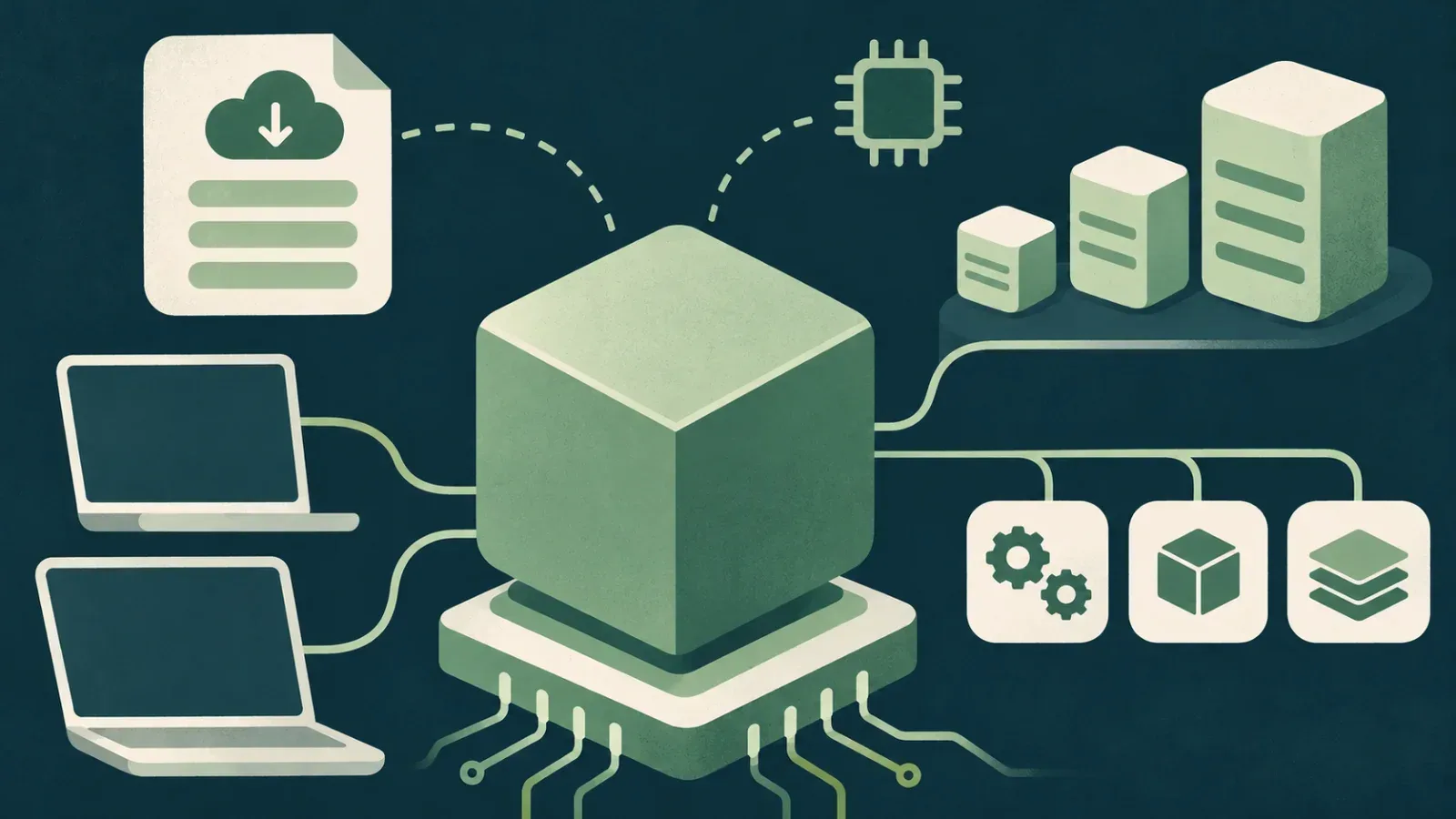
Illustration generated with ChatGPT
On October 25, 2026, an announcement highlighted how Cerebras deploys trillion-parameter AI models across multiple processors. The underlying engineering article, written by Sarah Chieng and published on October 22, explains the company's approach to model placement, memory and concurrent inference. Cerebras uses Kimi K3 as an example of serving a model much larger than one wafer can hold.
What Cerebras revealed about large-model inference
The Cerebras engineering article (opens in a new tab) explains how its WSE-3T processors work together to serve multi-trillion-parameter models. Cerebras describes an architecture capable of generating 1000-2000+ tokens per second, with model weights distributed across wafers.
Trillion-parameter inference was already part of Cerebras's offering. In May 2026, the company announced enterprise trials of Kimi K2.6 (opens in a new tab), a one-trillion-parameter model. Artificial Analysis measured 981 output tokens per second through a private Cerebras endpoint.
Cerebras also introduced CS-4 in August 2026. Its earlier hardware announcement (opens in a new tab) described inference exceeding 1,000 tokens per second for models above 10 trillion parameters. That larger-model performance claim was based on extrapolation from internal benchmarking.
The October article provides the implementation details behind this approach. It explains how Cerebras allocates model layers, avoids repeatedly transferring weights and processes concurrent requests.
It does not announce a publicly available Kimi K3 inference endpoint.
How Cerebras maps Kimi K3 across 59 wafers
Each WSE-3T wafer contains 44 GB of on-chip SRAM. That memory is insufficient for a trillion-parameter model's complete weights.
Cerebras uses Kimi K3 to demonstrate its distribution method. Moonshot AI's official Kimi K3 model card (opens in a new tab) specifies 2.8T total parameters, while Cerebras rounds the model to approximately 3 trillion parameters.
The Cerebras example assumes:
- A 256k average request size
- 4-bit weight quantization
- An 8-bit key-value (KV) cache
- 69 linear-attention layers and 24 full-attention layers
Under these assumptions, Cerebras estimates approximately 16 GB of weights per layer.
Linear-attention layers maintain a fixed-size state per request rather than storing keys and values for every token. Cerebras can therefore place two such layers on each wafer.
Full-attention layers require memory for a KV cache. Cerebras assigns one full-attention layer per wafer, reserving the remaining memory for request state.
The resulting example uses 35 wafers for linear-attention layers and 24 for full-attention layers, totaling 59 wafers.
Cerebras's compiler maps layers onto wafer regions. Its runtime then transfers intermediate activations between processing stages using RDMA over Ethernet, with approximately 2 microseconds per hop.
The important distinction is what travels between wafers. Model weights generally remain in on-chip memory, while activations move through the pipeline. Cerebras says entire layers usually fit on individual wafers under this arrangement.
How the pipeline handles multiple requests
Cerebras does not process each request through the entire pipeline before accepting another.
Instead, separate pipeline stages work on different requests simultaneously. A stage processing one request can run while another stage processes a different request.
Each stage can also process a micro-batch containing several requests. Cerebras explains that the approximate number of requests in flight depends on the number of stages multiplied by micro-batch size.
The micro-batch setting creates a performance tradeoff. Smaller micro-batches favor individual request speed. Larger micro-batches increase aggregate throughput.
Concurrency also depends on available KV-cache memory. Every active request needs its own cache allocation on wafers containing full-attention layers.
That matters for deployment planning because model weights are only part of the memory requirement. Request length and concurrent traffic also consume capacity.
What this changes for developers and infrastructure teams
The architecture is relevant to teams serving large models for coding agents, research systems and other inference-heavy applications.
For an application making sequential model calls, output generation speed affects the time spent waiting for responses. Cerebras's pipeline design addresses that delay while supporting concurrent traffic.
Infrastructure teams get a more specific explanation of Cerebras's memory allocation. The 59-wafer example shows why full-attention layers require different placement from linear-attention layers.
There is also an important measurement distinction. Output speed for an individual request does not describe the complete serving system.
Cerebras identifies total token throughput per unit of power, measured at comparable output generation speeds, as a more useful efficiency metric. Its October article does not provide a measured Kimi K3 result in tokens per second per megawatt.
How to access Cerebras inference
Cerebras directs developers to cloud.cerebras.ai for its inference API. The company provides the following route:
- Visit the Cerebras inference cloud and obtain an API key.
- Check the available model catalog for models accessible to the account.
- Use the supported inference API to experiment with available models.
- Contact Cerebras sales about deploying models that require enterprise arrangements.
The Cerebras pricing page (opens in a new tab) describes a developer tier for experimentation and an enterprise offering for production workloads.
Its developer promotion provides a one-time $5 credit after adding a valid payment method. The credit expires 30 days after activation. Cerebras does not list a public self-service price specifically for Kimi K3.
Developers interested in the model itself can access Moonshot AI's published Kimi K3 weights. Its Hugging Face page includes a vLLM serving example:
vllm serve "moonshotai/Kimi-K3"
That command uses vLLM, not Cerebras's wafer-scale runtime. HuiaHub also has a guide to serving open models with vLLM.
Availability limits and unanswered questions
Cerebras presents the Kimi K3 wafer allocation as an illustrative configuration. The article does not establish that the exact 59-wafer arrangement is available through a public API.
The 256k request size is an assumption for its memory calculations. It is not a confirmed Cerebras API context limit for Kimi K3.
Cerebras also does not publish an independently measured Kimi K3 throughput figure for this configuration, a precise maximum concurrency count or end-to-end response latency under defined workloads.
Public availability regions, a Kimi K3-specific API price and access requirements for the illustrated deployment remain unspecified.
Frequently asked questions
Is 1000-2000+ tokens per second a measured Kimi K3 result?
Cerebras states this speed range when describing its multi-trillion-parameter serving approach. The October article does not provide a separate, reproducible Kimi K3 benchmark with request settings and measured results. It also does not clearly establish how that range applies to an individual request under concurrent load.
Why does Moonshot AI list one dense layer while Cerebras discusses 24?
The sources use the word "dense" for different architectural properties. Moonshot's model card lists one dense model layer and separately identifies 24 Gated MLA attention layers. Cerebras calls the full-attention layers dense when explaining KV-cache placement, so the counts should not be treated as directly equivalent.
Can developers reproduce Cerebras's 59-wafer configuration?
Cerebras explains the mapping approach but does not publish a complete deployment procedure for reproducing that configuration. The article also does not provide the compiler settings, runtime configuration or access instructions for an equivalent WSE-3T cluster. Developers would need further information from Cerebras.
Sources
- 1.How Cerebras Deploys Trillion-Parameter AI ModelsOfficial docsPrimarycerebras.ai
- 2.cerebras.ai/blog/cerebras-kimi-k2-EnterpriseWeb
- 3.cerebras.ai/blog/introducing-cerebras-cs-4Web
- 4.huggingface.co/moonshotai/Kimi-K3RepositoryPrimary
- 5.cerebras.ai/inferenceWeb
- 6.cerebras.ai/pricingWeb
Spotted an error? See our corrections policy.
Enjoyed this? Get the weekly brief.
New guides, Project & Tool of the Week and the AI developments that matter. One email, no spam.
Read next
 TutorialModels & inference
How to run Qwen locally: Qwen3.8-27B on Windows and Mac, with download sizes
How to run Qwen locally: check which Qwen3.8 download fits your Windows PC or Mac, then start it with Ollama, LM Studio or llama.cpp.
9 min read
 TutorialModels & inference
How to run Gemma 4 locally on Windows and Mac: sizes, downloads and commands
Pick a Gemma 4 size that fits your PC or Mac, check the published download sizes, and see how to run Gemma 4 locally with Ollama, LM Studio or llama.cpp.
9 min read
- ComparisonModels & inference
Ollama vs vLLM: which one to run your open models with
Ollama vs vLLM compared on model formats, hardware, OpenAI-compatible APIs, batching, install and licenses, so you can pick the right one.
7 min read
More on these topics
Related open-source projects
vLLM is a Python library and server that runs large language models on GPUs and answers requests from many users at once. It started in the Sky Computing Lab at UC Berkeley and is now maintained by a community the project puts at over 2,000 contributors. You can use it two ways. The LLM class runs batched generation inside a Python program. The vllm serve command starts an HTTP server that speaks the OpenAI API (models, completions and chat completions), so existing OpenAI client code can point at it by changing the base URL. The docs also list Anthropic Messages API and gRPC support. Most of the project's work goes into throughput and memory use. It manages the attention key-value cache with PagedAttention, batches incoming requests continuously, caches shared prompt prefixes and supports many quantization formats, from FP8 and INT4 to GPTQ, AWQ and GGUF. Large models can be split across GPUs with tensor, pipeline, data, expert and context parallelism. The README says it supports more than 200 model architectures from Hugging Face, including mixture-of-experts, multimodal, embedding and reward models.
- Stars
- 97K
- Language
- Python
- License
- Apache-2.0
- Momentum
- +0.4% 7dMature
Related videos
 12:20intermediate
The AI Memory Wall: Why LLMs & AI Accelerators Hit a Bottleneck
An IBM Technology explainer for ML engineers on why memory bandwidth can limit LLM inference and how arithmetic intensity, the roofline model, and batching relate to performance.
IBM Technology · 50K views ·
 16:29intermediate
Stop Guessing Your vLLM Config: Benchmarking LLMs on Runpod - Chris Vela, Runpod
For engineers serving open LLMs with vLLM, Chris Vela explains how to benchmark configurations, tune batching, and use workload data to guide deployment choices.
AI Engineer · 4.9K views ·
 20:51advanced
Training Your Own Agent Models With RL Is Now Practical - Jason Mancuso, Modal
A 21-minute talk from Modal for engineers with agents in production who want to train their own models with asynchronous RL instead of treating models as swappable backends.
AI Engineer · 3.2K views ·
 11:47advanced
How Revolut Cut AI Coding Costs 90% With Self-Hosted Open Models - David Abitbol, Revolut
For AI infrastructure teams and engineering leaders, Revolut's case covers self-hosted GLM costs, delivery times, GPU tuning, and compliance.
AI Engineer · 8.2K views ·