Gemini 4 Carbon targets security work, with access restricted
Google announced Gemini 4 Carbon with stronger cybersecurity benchmarks and limited access for cyber defenders, ahead of a wider developer release.
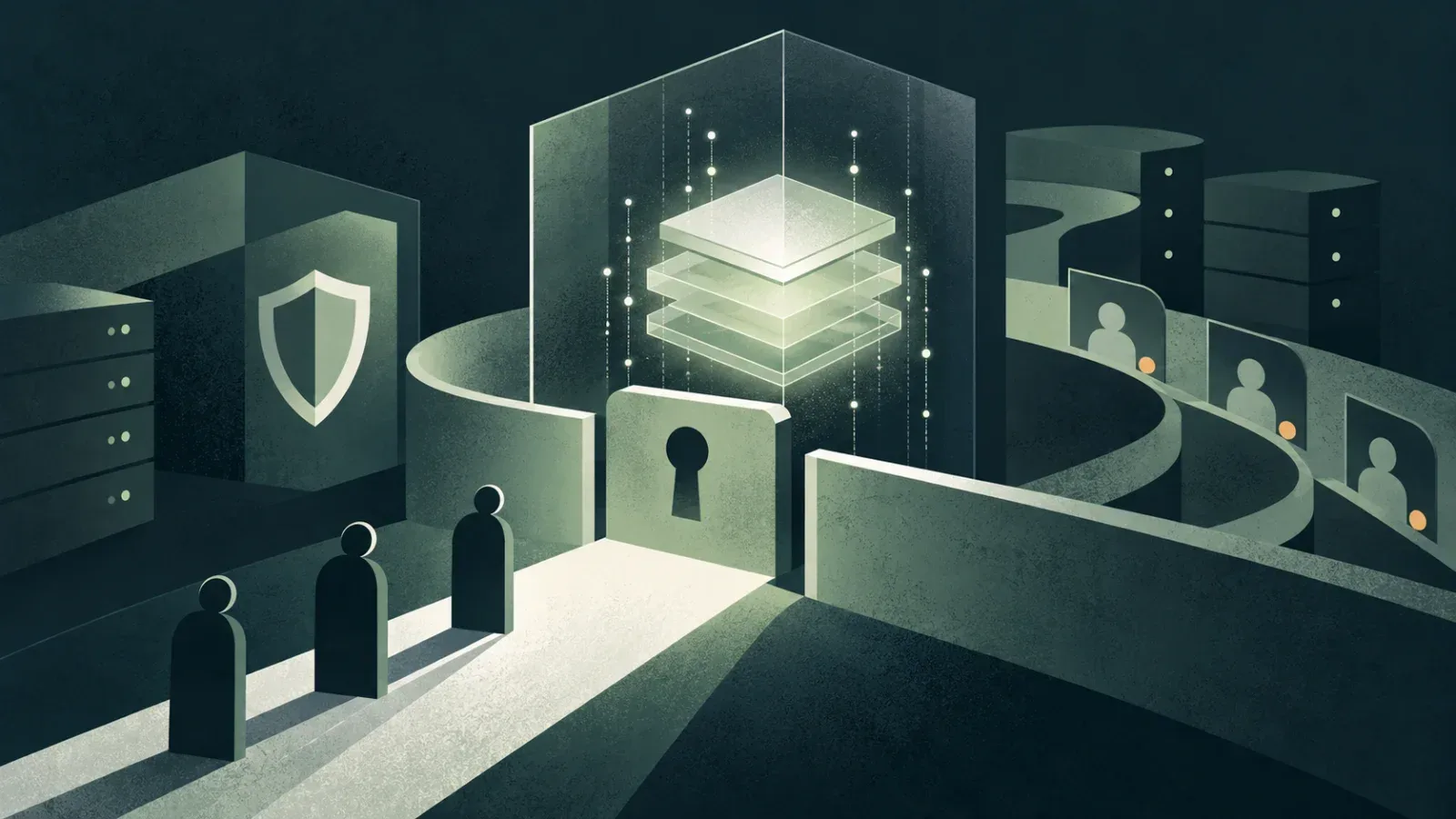
Illustration generated with ChatGPT
Google announced Gemini 4 Carbon on October 28, 2026, as a new model focused on difficult engineering and cybersecurity tasks. Google says Carbon improves vulnerability discovery, exploit validation, patching, and extended agent work. Access begins with selected cyber defenders rather than a public developer release.
What's new compared with Gemini 4 Argon
Gemini 4 Carbon follows Gemini 4 Argon, which Google released on October 13. Argon was already available through the Gemini API and Google AI Studio. Carbon takes a narrower initial route: Google plans to give selected security teams early access while it evaluates safeguards.
The Carbon announcement (opens in a new tab) describes an emphasis on sustained engineering work. Google says internal teams have run Carbon for days on tasks that involve tracing bugs and making changes across large codebases. That is an internal observation, not a published runtime guarantee for customer workloads.
Google also reports improved full-stack web development, scientific work, coding, and multimodal understanding. In its internal secure-code tests, Carbon achieved more than 2x Argon's success rate. Google has not published enough detail in the announcement to turn that internal comparison into an expected gain for a particular repository or coding agent.
The Argon launch announcement (opens in a new tab) gives useful context. Both models target complex engineering problems. Carbon adds a stronger emphasis on security assessment and remediation, backed by new benchmark results and a restricted launch. HuiaHub previously covered Gemini 4 Argon's developer rollout.
What the cybersecurity results measure
Google reports three external cybersecurity benchmark results for Gemini 4 Carbon. The announcement says these evaluations were conducted without guardrails.
- SEC-bench Pro: 88.2% for locating real software vulnerabilities.
- ExploitGym: 54.8% for exploitation tasks used to validate whether vulnerabilities can be exploited.
- CWE-bench: 71.0% for producing code fixes for identified weaknesses.
These percentages describe performance on named tests. They are not deployment success rates or assurances that generated patches are safe to merge. Google does not provide corresponding Argon scores for these three tests in the announcement, so the size of each improvement over Argon is unclear.
Google also places Carbon at #1 with a score of 59 on v5.0 of the Artificial Analysis Intelligence Index. The announcement reports gains in web development as well, but its detailed security results are more directly relevant to vulnerability triage and patch review.
For security teams, the proposed workflow covers finding a defect, checking whether the defect is exploitable, and preparing a fix. Those are distinct steps. Human review and normal verification remain necessary before accepting a patch or treating a finding as confirmed.
Changes to agent behavior and safety
Google says Carbon uses the same underlying safety approach as Argon, including misuse defenses, prompt-injection protections, and monitoring of model reasoning. Its reported improvements focus on preventing agents from inventing evidence, taking shortcuts, or performing work beyond their assigned scope.
In Google's internal tests, unsupported claims fell by approximately 2x compared with Argon. Google also reports reductions of 26% in overreach and 29% in under-service. Those figures come from Google's testing, without a detailed public reproduction procedure in the announcement.
On Gray Swan's indirect prompt-injection benchmark, Google reports an attack success rate of 0.7% for Argon and 0.0% for Carbon. The Carbon result covers the evaluated attacks. It does not establish resistance to every prompt-injection technique.
These distinctions matter for teams building coding agents. Long-running automation needs accurate status reporting, bounded permissions, and reviewable changes. Carbon's reported behavior targets those failure modes, but access restrictions currently limit independent checks.
Who can use Gemini 4 Carbon and how to try it
Google says a subset of cyber defenders will receive access starting the week of October 28. It plans to add trusted partners through its Fairwind Program. Google also says it is participating in a voluntary US government process for testing the model before wider release.
There is no public Carbon quickstart or application procedure in the announcement. Google's Gemini API model list (opens in a new tab), checked October 29, lists Gemini 4 Argon but does not list Carbon or a Carbon model identifier. No Carbon API command can be responsibly supplied from those sources.
Developers who need a publicly documented Gemini 4 model can use the Argon API guide (opens in a new tab). It identifies gemini-4-argon and provides Python, JavaScript, and REST examples. Those examples are for Argon and should not be presented as Carbon instructions.
Google has not specified Carbon's eligible regions, general release date, consumer plans, API rate limits, context window, or supported input and output formats. The announcement also provides no open-weight release or download instructions.
Pricing and remaining gaps
Google says Carbon will launch at an introductory rate of $2 per million input tokens and $10 per million output tokens. Cached input receives a 95% discount against the input rate. After the introductory period, Google says the rates become $4 per 1M input tokens and $20 per 1M output tokens.
The announcement does not give an end date for Carbon's introductory period. Google's API pricing page (opens in a new tab) sets November 30, 2026, as Argon's introductory pricing cutoff, but has no Carbon billing entry. That date cannot be carried over to Carbon.
The announced prices should be read as planned launch pricing, not proof that Carbon is available for paid self-service use today. The official pages checked contain no Carbon model card or API specification. Token limits, request handling, tool support, and operational access conditions remain unconfirmed.
Frequently asked questions
Is Gemini 4 Carbon replacing Gemini 4 Argon?
Google describes Carbon as a newer frontier model building on Argon. It has not announced an Argon retirement or migration requirement. Argon remains the publicly documented Gemini 4 model in the API model list checked October 29.
Does Gemini 4 Carbon support Argon's 1M-token context window?
Google's Carbon announcement does not specify a context window or maximum output length. Argon's documentation describes a unified 1M-token window, but that specification cannot be assumed for Carbon. Google has not published equivalent Carbon limits on the pages checked.
Does Carbon's 0.0% prompt-injection result mean untrusted content is safe?
The result applies to the attacks evaluated in the named benchmark. Google's announcement does not provide a universal guarantee for arbitrary repositories, websites, documents, or tool outputs. Teams still need permission controls and verification when agents process untrusted material.
Sources
- 1.Introducing Gemini 4 CarbonOfficial docsPrimaryblog.google
- 2.Gemini 4 Argon is now available for everyoneOfficial docsPrimaryblog.google
- 3.ai.google.dev/gemini-api/docs/modelsWeb
- 4.ai.google.dev/gemini-api/docs/latest-modelWeb
- 5.ai.google.dev/gemini-api/docs/pricingWeb
Spotted an error? See our corrections policy.
Enjoyed this? Get the weekly brief.
New guides, Project & Tool of the Week and the AI developments that matter. One email, no spam.
Read next
 TutorialModels & inference
How to run Qwen locally: Qwen3.8-27B on Windows and Mac, with download sizes
How to run Qwen locally: check which Qwen3.8 download fits your Windows PC or Mac, then start it with Ollama, LM Studio or llama.cpp.
9 min read
 TutorialModels & inference
How to run Gemma 4 locally on Windows and Mac: sizes, downloads and commands
Pick a Gemma 4 size that fits your PC or Mac, check the published download sizes, and see how to run Gemma 4 locally with Ollama, LM Studio or llama.cpp.
9 min read
- ComparisonModels & inference
Ollama vs vLLM: which one to run your open models with
Ollama vs vLLM compared on model formats, hardware, OpenAI-compatible APIs, batching, install and licenses, so you can pick the right one.
7 min read
More on these topics
Related videos
 17:16intermediate
Prompt Caching Explained: Stop Overpaying for AI Agents
A 17-minute explainer on what prompt caching stores and the agent-code mistakes that break it, for developers paying for long AI agent sessions.
Hugging Face · 23K views ·
 54:15advanced
Machine Studying with Jacob X. Li - Weaviate Podcast #148!
A technical discussion for AI agent developers and researchers on how agents can study document collections before receiving tasks, and how to measure that preparation.
Weaviate vector database · 48 views ·
 11:22intermediate
THIS is how you build agentic RAG systems that work
An 11-minute Weaviate explainer for developers whose RAG answers are poor: it splits an agentic RAG pipeline into five systems and where each one breaks.
Weaviate vector database · 987 views ·
 20:12intermediate
Stop Fine-Tuning to Fix Retrieval Problems — Anant Srivastava
A 20-minute talk for engineers about to fine-tune a model to fix wrong answers: a clear rule for what belongs in the prompt, in retrieval and in weights.
AI Engineer · 1.9K views ·