Stop Giving Your Agent Tools. Give It a Sandbox - Mikyo King, Arize AI
by AI EngineerUploaded Posted 14:38 long30K views
Why watchFor developers building AI agents, Mikyo King explains code mode, how Phoenix uses sandboxes, the problems it introduces, and measured token and cost savings.
What this video covers
Mikyo King, head of open source at Arize AI, examines an alternative to traditional tool-calling agents: giving an agent a sandbox where it can write and execute code to work with tools.
At 0:36, King introduces the changing boundary between engineers and other users. At 1:52, he turns to the classic tool-calling agent and its limitations. Tool descriptions and raw responses can occupy large portions of the model's context, leaving less room for the task itself.
The 3:03 chapter introduces code mode. Rather than presenting every tool and its output directly to the model, this approach provides an execution environment where the agent can find tools, combine operations in code, and return selected information. At 4:37, King explains why this design can reduce context consumption.
At 6:11, the discussion moves to Arize AI's Phoenix implementation. King covers how Phoenix uses Bash, a Python sandbox, SQL, and UI control within its code-mode approach. This chapter connects the architecture to a specific implementation.
The 8:19 section examines the operational complications. Managing secrets, controlling permissions, maintaining durability, and dealing with double sandboxing introduce costs beyond the model's token usage. At 10:42, King discusses problems that remain unresolved.
Evaluation begins at 11:44 with Harbor. King uses it to examine code mode and reports the results at 12:55: 43% fewer tokens and 31% lower cost. These are results from the evaluation presented in the talk, not guaranteed savings across agent implementations.
The final chapter starts at 13:59 and presents King's takeaways from the architecture, Phoenix implementation, operational concerns, and evaluation.
Written by HuiaHub from the creator's title, description and chapters. All credit for the video goes to AI Engineer.
Key takeaways
- Tool catalogs and raw responses can consume substantial agent context.
- Code mode lets agents find and combine tools through code executed in a sandbox.
- Phoenix uses Bash, a Python sandbox, SQL, and UI control.
- Secrets, permissions, durability, and double sandboxing introduce operational complications.
- The Harbor evaluation reports 43% fewer tokens and 31% lower cost.
Chapters
- 0:00Intro (opens YouTube at this moment)
- 0:36The line between engineers and everyone else is dissolving (opens YouTube at this moment)
- 1:52The classic tool-calling agent (opens YouTube at this moment)
- 3:03What is code mode? (opens YouTube at this moment)
- 4:37Why code mode works (opens YouTube at this moment)
- 6:11How Phoenix uses code mode (opens YouTube at this moment)
- 8:19The hidden costs of code mode (opens YouTube at this moment)
- 10:42Open problems (opens YouTube at this moment)
- 11:44Evaluating code mode with Harbor (opens YouTube at this moment)
- 12:55Results: 43% fewer tokens, 31% lower cost (opens YouTube at this moment)
- 13:59Takeaways (opens YouTube at this moment)
Sources
- Stop Giving Your Agent Tools. Give It a Sandbox - Mikyo King, Arize AIVideoPrimaryyoutube.com
- AI EngineerChannelPrimaryyoutube.com
Related guides
 NewsCoding & dev tools
GitHub Copilot reaches JetBrains Air and Xcode, with Agent Merge and CLI updates
GitHub's November 6 Copilot changelog adds JetBrains Air and Xcode support, Agent Merge updates in the Copilot app and a /settings dashboard in the CLI.
4 min read
 NewsCoding & dev tools
GitHub Copilot impact dashboard now tracks Chat and the VS Code Agents window
GitHub's Copilot impact dashboard now reports Copilot Chat and VS Code Agents window use, and renames Passive users to Chat-first users, for admins.
3 min read
 NewsAgents & automation
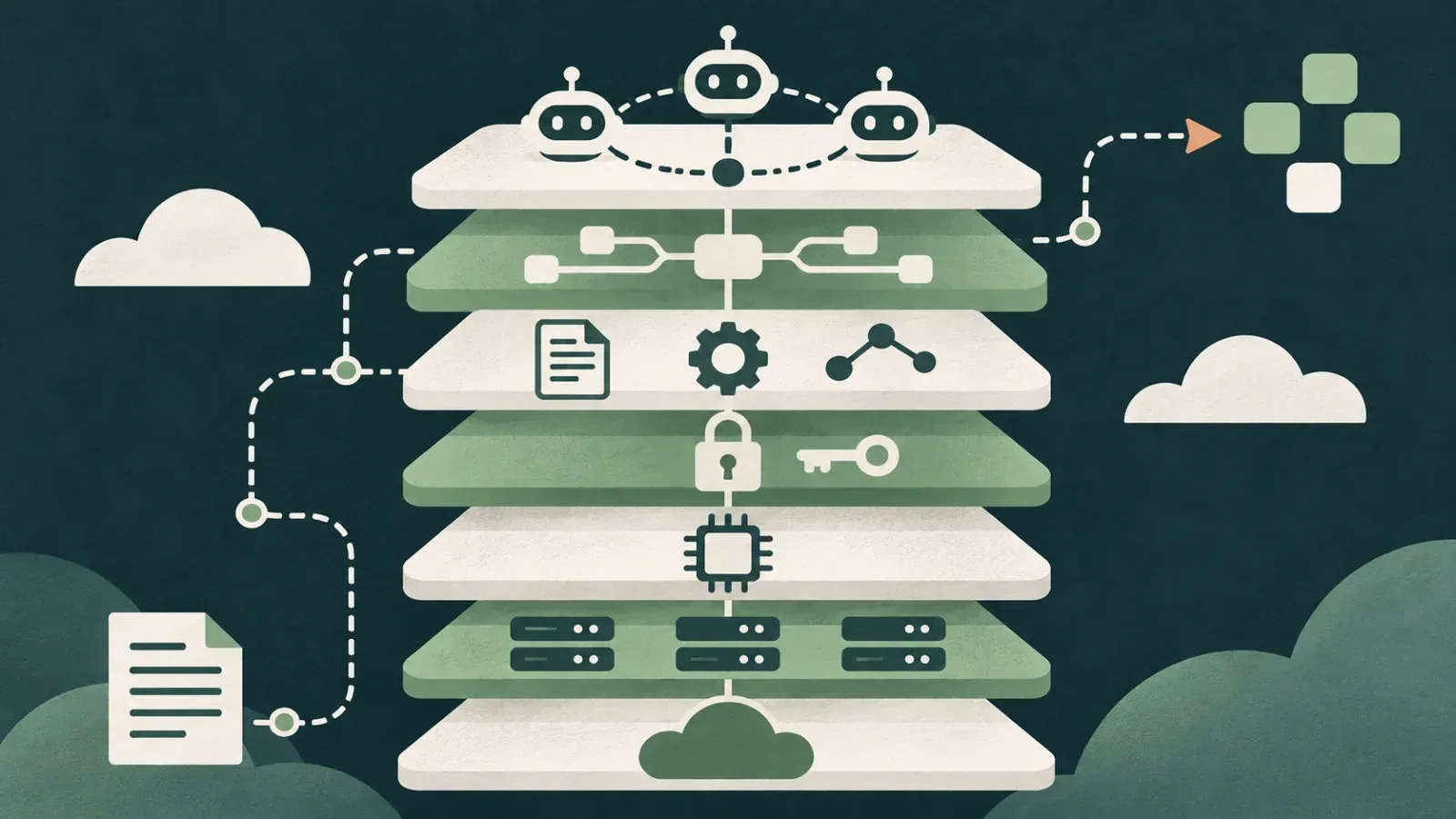
AWS lays out a seven-layer reference architecture for agents on AgentCore
AWS published a seven-layer reference architecture and sample repo for multi-agent apps on Bedrock AgentCore. What each layer does and how to try it.
4 min read
More videos
 20:51advanced
Training Your Own Agent Models With RL Is Now Practical - Jason Mancuso, Modal
A 21-minute talk from Modal for engineers with agents in production who want to train their own models with asynchronous RL instead of treating models as swappable backends.
AI Engineer · 3.2K views ·
 13:27intermediate
Your Financial Agent Needs to Show Its Work - Anirudh Veeraragavan, Fieldguide
A 13-minute talk on four safeguards that make a financial audit agent's decisions traceable, for engineers building agents for finance and audit work.
AI Engineer · 160 views ·
 18:28intermediate
AI Can't Make Up a Number It Can't Look Up - Vinoo Ganesh, Kepler
An 18-minute talk on stopping language models from inventing financial figures, for engineers building AI over documents where each number has to be right.
AI Engineer · 4.3K views ·
 11:47advanced
How Revolut Cut AI Coding Costs 90% With Self-Hosted Open Models - David Abitbol, Revolut
For AI infrastructure teams and engineering leaders, Revolut's case covers self-hosted GLM costs, delivery times, GPU tuning, and compliance.
AI Engineer · 8.2K views ·